The first of three key metrics of smart growth – how compact the development pattern of a place is – refers to the extent to which activities, whether residential or non-residential, are concentrated near each other. It can be quantified as “net activity density.”
Net activity density is computed as the sum of population and employment for a municipality, divided by the municipality’s developed land area. Net activity density is a more accurate descriptor of a place’s built environment than simple gross population density. It is essential to note that this metric pertains only to the developed portion of the municipality. By using only developed acres as the denominator, rather than total acres, we avoid diluting the value of the statistic through the inclusion of undeveloped land. By counting jobs as well as population, we indirectly account for buildings used for commercial purposes, in addition to residential buildings.
Based on an examination of the distribution of net activity density (population plus jobs per square mile) and a look at a handful of individual municipalities for verification, the following categories were defined:
- Urban = net activity density ≥ 15,000 population plus jobs per square mile
- Small City/Urban Suburb = net activity density between 10,000 and 15,000
- Dense Suburban/Small Town = net activity density between 7,500 and 10,000
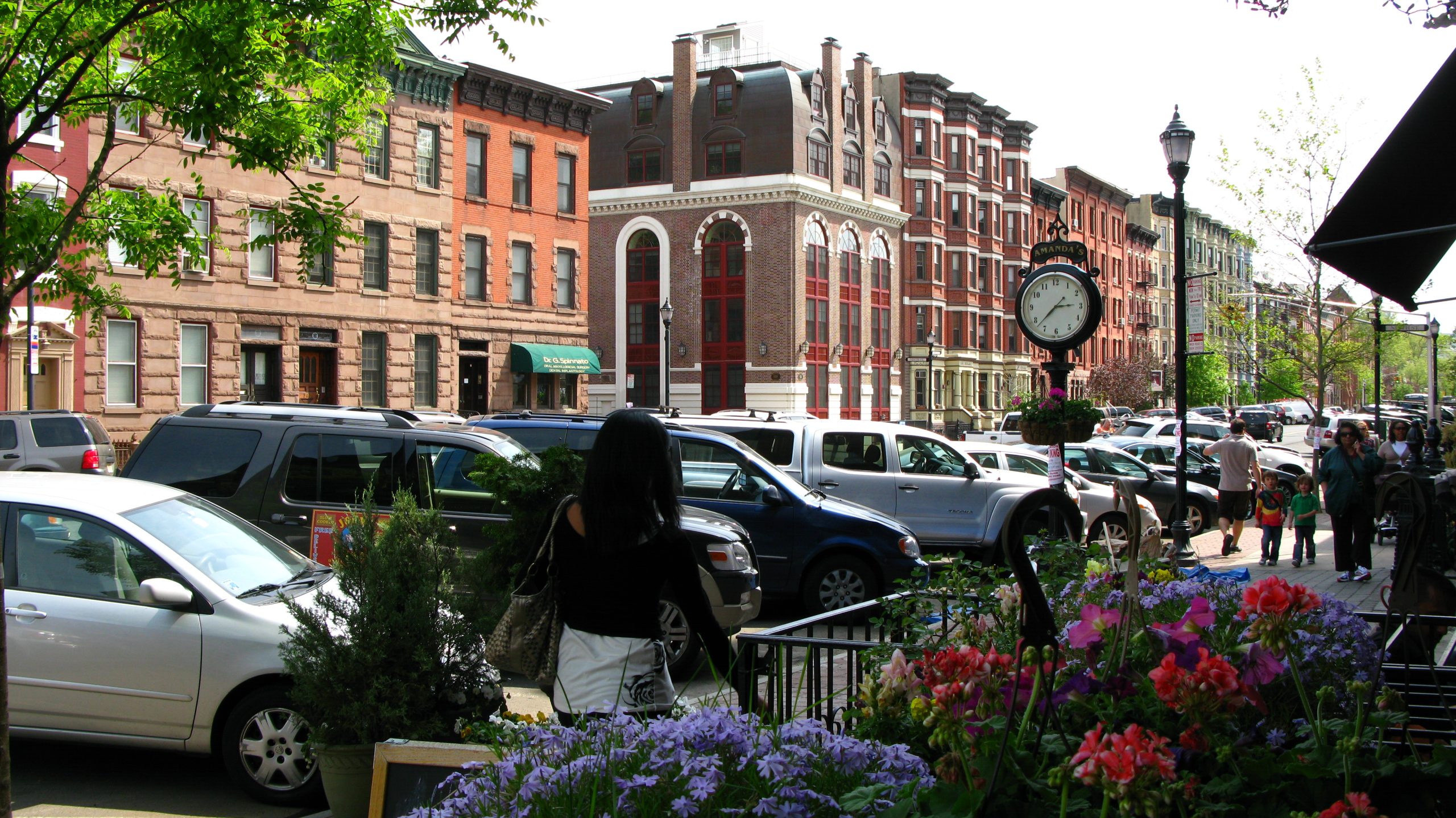
Places falling into the higher categories indicate a more compact and active area. These places bring destinations closer together, making the area more easily accessible, efficient, and supportive of mixed uses, which is especially important for people with mobility constraints.



 Explore Smart Growth 101